We Value Your Privacy
We use cookies to enhance your browsing experience, serve personalised ads or content, and analyse our traffic. By clicking 'Allow All', you consent to our use of cookies. For further details, please see our cookies policy.
We use cookies to enhance your browsing experience, serve personalised ads or content, and analyse our traffic. By clicking 'Allow All', you consent to our use of cookies. For further details, please see our cookies policy.
View navigation
SIXTH FORM OPEN EVENING - WEDNESDAY 4 NOVEMBER 2026 5 - 7pm

Curriculum
Religious Education (RE) contributes dynamically to young people’s education in schools by provoking challenging questions about meaning and purpose in life, beliefs about God, ultimate reality, issues of right and wrong and what it means to be human. Through the study of religions and beliefs, they learn about and from world views in local, national and global contexts, to discover, explore and consider different answers to these questions. They learn to weigh up the value of wisdom from different sources, to develop and express their insights in response, and to agree or disagree respectfully.
At Temple Moor, Religious Education is taught as a stand alone subject at Key Stage 3. Students study the key aspects of the major world faiths, as well as looking at bigger questions of morality and responsibilities, applying and discussing key religious teaching to a variety of social and moral contexts. There is a strong emphasis on students applying not only knowledge of Religion (Theology), but also considering how religion impacts on our thinking (Philosophy) and on our lives (Social Sciences). We ask big questions including; What is religion?, Should we keep our promises?, Why is Christianity so Diverse – is it dying or thriving?, and What do Buddhists believe?
At Key Stage 4, Religious Education is taught as one of the fundamental themes running through the Personal Development programme, with students studying religious issues as part of the wider thematic programme. Students look at issues such as Medical Ethics and Equality in a wider social and religious context.
In addition to Personal Development, we offer GCSE Religious Education as an option for students. Students follow the Edexcel Religious Studies B route. This includes two units on two world faiths, Religion and Ethics (Christianity Paper 1) and Religion, Peace and Conflict (Islam Paper 2). Both papers allow for a developed understanding of the religions themselves but also how these religions fit into a wider national and international context in the 21st Century. Topics covered include Christian and Muslim Belief, Matters of Life and Death, Marriage and Family, Crime and Punishment, Peace and Conflict.
At Key Stage 5, issues of morality and bigger questions are dealt with through the CPD programme offered to our Post 16 students, to allow them to debate topics and issues that affect society today. By doing this we allow students to get involved in developing the skills of debate, research and critical thinking on major world themes, that often have a religious/ethical focus.
In Y7 RE units include, What is religion?, What do Hindu’s believe?, Should we keep our promises?
Y8 students build on the knowledge from Y7, by looking units on What Buddhists believe?, Why is Christianity so diverse and is it a dying or thriving religion? Our final Y8 unit is, ‘What is it like to be a Young Muslim in Britain today?’
In Y9 student will move onto study Sikhism and Non Religious views in depth, whilst beginning to ask bigger ethical questions from religious and non-religious perspectives.
Issues covered in Personal Development include, Equality, Diversity, Rights and Responsibilities, as well as religious views and teachings on a wide range of contemporary issues. Students have to consider diverse views on a wide variety of topics and part of this includes examining how religious teachings and beliefs may guide the decisions someone makes and the impacts this has.
Where relevant, Religious Education is also dealt with in a Cross Curricular way, and links with other subjects are made where they are relevant.
Examples include: History with introductions to Christianity, Islam and Judaism before the study of topics relevant to these faiths. In Art, students study artists such as Frida Khalo whose religious faith inspired their creations. In Communication, a wide variety of ethical issues are discussed such as equality. In Music, students study pieces that have links to Hindu Philosophy as well as wider ethical issues such as Poverty, Punishment and Relationships
Students begin with introductions to both Christianity and Islam, before completing units on belief. This gives them the relevant theological knowledge to then apply these beliefs to a number of ethical contexts. Students complete study on Matters of Life and Death and Peace and Conflict.
In Year 11 Students focus on how religion affects the life of the religious groups chosen. They then move on to look at issues around Marriage and Family and Crime and Punishment, and how relevant religious belief impacts on these ethical areas.
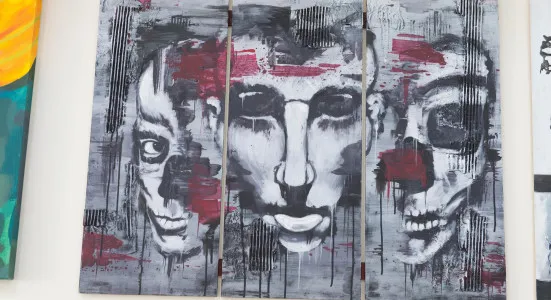

Students are supported in their study of RE through the assembly and form time programme. This allows students to have time to reflect on issues related to religious, moral and ethical themes at key points in the year, often related to religious, national and international events of significance. We have a successful RE enrichment club running for Y7. Students also have the opportunity to complete Religious/SMSC challenge in form time, linked to key events and faiths.
Religious Studies is a highly respected discipline, with many employers and higher educational providers looking for the skills it develops. Many studies who have studied the subject go on to work in Public Service, Journalism, Politics, The Law, Tourism, and Medicine.